Pages

Wednesday, March 1, 2023

To Lesley Rausch, With Love


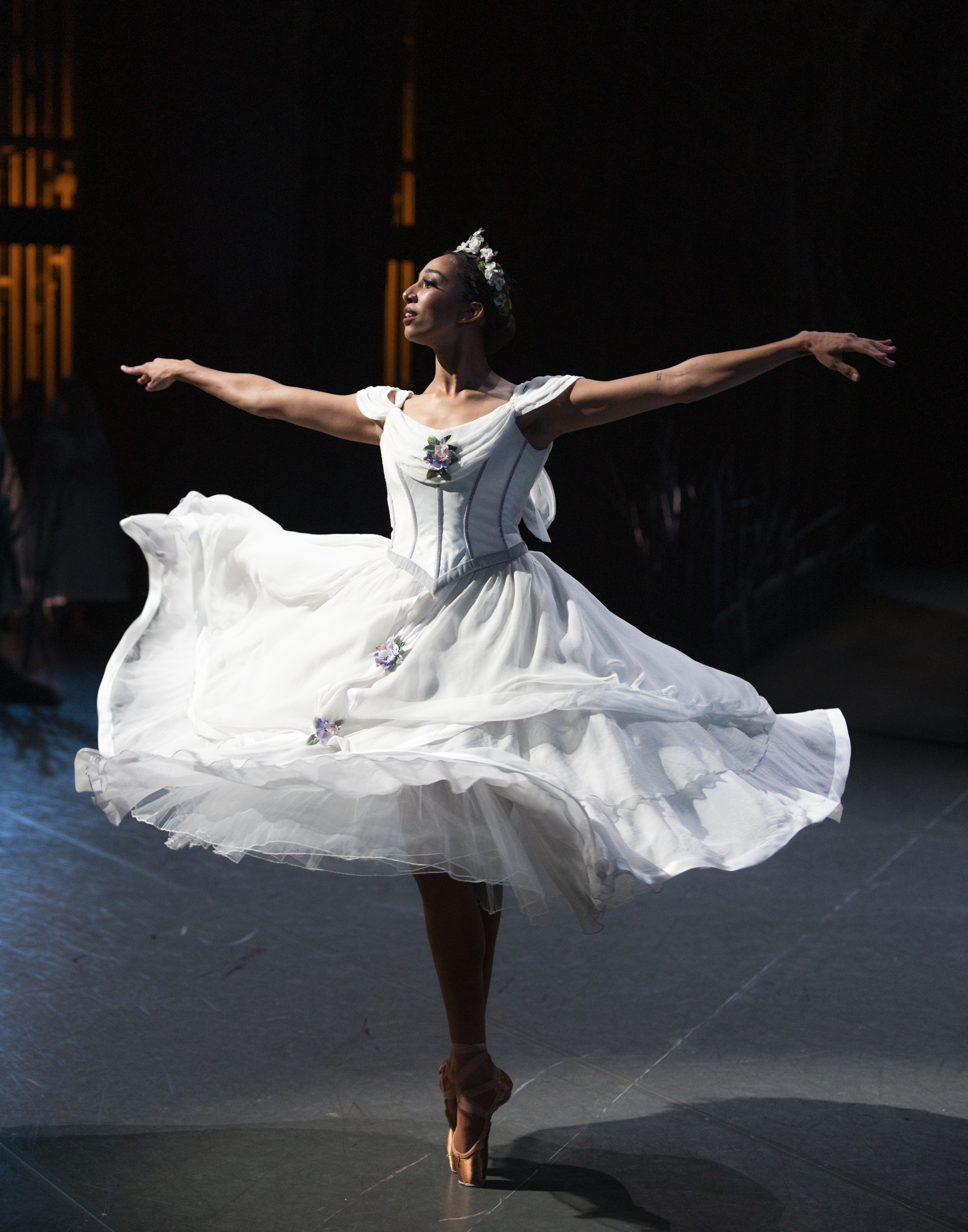
Lesley Rausch as Odette in Kent Stowell's Swan Lake
photo @ Lindsay Thomas


I knew it was coming but I still wasn't ready when I got the news.

After 22 years at Pacific Northwest Ballet, Lesley Rausch has announced she'll retire at the end of this artistic season. Lesley is currently the longest-tenured dancer in the company, one of the few who has straddled the artistic directorships of Kent Stowell and Francia Russell and Peter Boal.

Lesley Rausch and former PNB principal dancer Seth Orza in Balanchine's
Slaughter on Tenth Avenue. Photo @ Angela Sterling


As I said, I knew it was a matter of time, but every ballet dancer's retirement hits me hard, as if I'm losing an onstage friend.

I've spent a lot of time talking to PNB dancers over the years, but I didn't know Lesley particularly well. Then, almost two years ago I ran into her on the street near Seattle Center. Although the pandemic was still in full swing, we’d just started to emerge from isolation, emboldened by the new vaccines.

Lesley was on her lunch hour; Pacific Northwest Ballet dancers were back in the studio, although they weren’t yet performing for in-person audiences.

Lesley Rausch at Seattle Center, September 2021
photo @ Marcie Sillman


I didn't really know Lesley, but we struck up a conversation. Remember, most of us hadn’t been face-to-face with other humans for months and months, so every encounter felt like greeting a long-lost relative. 

That was mid-2021; Lesley was 39, an age when many ballet dancers are planning the next phases of their lives. Lesley had been certified to teach Pilates, but she was one of the few dancers of her cohort who’d chosen to return to PNB for the coming season instead of retiring. We talked a bit about why she’d made the decision to keep dancing rather than step into her new career. 

Lesley with former PNB principal dancer Karel Cruz in George Balanchine's Agon
                                                              photo @ Angela Sterling


Despite her well-made plans for life post-PNB, Lesley didn’t intend her ballet career to fade away during Covid. She wanted the opportunity to dance again before a live audience.

Made sense to me.


We ended that chat, wished each other well, and parted ways. But I was intrigued by our conversation. A couple of weeks later, I approached Lesley to see if I could interview her regularly over the course of the 2021-22 artistic season. I was curious to hear more about how it felt--both in body and mind--to come back to the stage after months away from the rigors of the studio and regular performances. I wanted to know what drove her to keep dancing.

Lesley Rausch and James Kirby Rogers in Giselle, 2023
photo @ Angela Sterling


Lesley agreed to my request, and it was my great fortune to talk with her several times last season, and to write stories both here and for other media outlets. 

She was candid about the discipline required to prepare her body for the rigors of ballet: hot (“hot hot hot” in her words) showers, regular Pilates and physical warmups before she even headed into the PNB studios, great physical therapists (she thanks PNB's Boyd Bender in her goodbye announcement) and, above all, persistence.

Lesley told me that sometimes, after a full day in the studio, her body was so exhausted that she just came home and cried. She also told me how much ballet meant to her. She’d started classes as a very young girl in Ohio and climbed through the ranks at PNB to become a principal dancer in 2011. 

More than the professional accomplishements, Lesley thinks of the dancers and PNB staff as her second family. She met her husband, former PNB principal dancer Batkhurel Bold, at the company.

Lesley with her husband Batkhurel Bold, photo @ Angela Sterling


After more than two decades at PNB, Lesley is the most senior company member, the dancer who performs Giselle, Aurora or Odette/Odile on opening night.

But that wasn’t always the case for this graceful---and technically skilled---artist. PNB had other wonderful principal dancers when Lesley was coming up: Kaori Nakamura, Noelani Pantastico, Carla Korbes and Carrie Imler to name just a few. She kept working, kept performing, and has danced hundreds of roles over her career.

Lesley has always been a technical whiz, a dancer who executes the classical choreography with precision. But I first really noticed her artistry in the 2017 PNB production of Jean Christophe Maillot’s Cendrillon (which we English speakers know better as Cinderella).

Lesley as the stepmother in Maillot's Cendrillon, 2017
photo @ Angela Sterling


Lesley performed the role of Cinderella’s stepmother, dressed in the most outrageous costume; it looked like she had a dragon’s tail. And I remember so clearly how Lesley imbued that character with a touching pathos. We usually think of the stepmother as full of spite; in Maillot's version, Cinderella’s father remarries after his wife dies, but can’t quite forget his first love. Lesley showed us the pain of a woman who can never measure up to somebody else's memory; she showed us the roots of the spite and malevolence.

I asked Lesley about that performance; I was curious to know when she felt able to bring herself fully to the story ballet roles she loves. I was surprised when she told me it hadn't even been 10 years. Her focus had been on the choreography. Only when she felt it in her bones could she reveal her emotional side to audiences. It's been worth the wait.

Over the past two post-pandemic in-person seasons, Lesley has shown us an exquisite Giselle, a tender Odette and her a devil-may-care alter-ego Odile, plus her first “sock” ballet, in a lovely dance created by Alonzo King. And, of course, she was electric in Ulysses Dove's Red Angels.

Lesley in Dove's Red Angels. Photo @ Angela Sterling


One of PNB’s first pandemic-era videos featured the exquisite principal dancer Dylan Wald as Apollo and Lesley as one of his muses. At one point in the video, Lesley touched Dylan’s finger. I confess the shock of seeing two humans touch after the long months of social distancing was something to savor. 

Lesley Rausch and Dylan Wald in George Balanchine's Apollo
Photo @ Lindsay Thomas


A dancer’s career is far too short; just as she reaches her peak artistry, her body tells her it’s time to move on. I’m so grateful to have gotten to know Lesley a bit more, to have a window into her hard work and mental preparations, and, above all, to watch her end her career the way she’d intended: dancing the roles she loved, giving audiences indelible moments to remember.

Lesley Rausch and Ezra Thomson in George Balanchine's A Midsummer Night's Dream
Photo @ Angela Sterling


We hope to see Lesley perform in April in George Balanchine's A Midsummer Night's Dream. PNB will honor Lesley’s career on June 11 at the Season Encore performance. I’ll be sitting in McCaw Hall that evening to show my appreciation for an artist and for a truly lovely human being.


Monday, February 6, 2023

PNB Gave Me The Wilis. Huzzah!


PNB Principal Dancer Elle Macy as Myrtha, Queen of the Wilis in the current production of Giselle
                                                                   photo @ Angela Sterling

Let me confess right from the start: I am not a huge fan of 19th century story ballets.

BUT.

I love Giselle. Partly that’s because it features some amazing dancing. But mostly because the band of female ghosts who emerge in Act 2 have stolen my heart. And their queen, Myrtha? I think she’s my favorite character in all of story ballet-dom. They’re truly the reason you need to see Pacific Northwest Ballet’s current production before it closes on February 12th.

To be honest, I don’t love Giselle, the main character, although on opening night, principal dancer Lesley Rausch was close to perfection, sassy in Act I and ethereal in Act 2. Plus jumpin’ James Kirby Rogers as her true love Albert, danced gorgeously that night.

Giselle and Albert get cozy on a bench, before everything goes to hell
James Kirby Rogers, left, with the incandescent Lesley Rausch in this photo @ Angela Sterling


I guess I should back up and tell you more about this ballet. 

First off, it’s old, probably the oldest work in PNB’s repertoire. It debuted in Paris in 1841. PNB’s version was reconstructed in 2011 from three different 19th century sources, decoded by dance/music historians Doug Fullington and Marian Smith and staged by PNB artistic director Peter Boal.

Here's the plot in a nutshell. A beautiful young peasant woman named Giselle falls for the new guy in town. And he falls for her. Problem is, he says he’s a peasant, but in reality, Albert is slumming it. He’s actually a nobleman. AND he’s engaged to someone else, a noblewoman named Bathilde, the daughter of a prince. Uh oh...

Giselle finds out the truth about Albert from a fellow peasant named Hilarion, who’s in love with Giselle. She goes nuts and dies of a broken heart. Curtain down on Act I.

Now we get to the best part.

Wilis!
photo @ Angela Sterling


The action moves to a forest that’s haunted by the ghosts of women like Giselle whose lovers have done them wrong. If you’re a man who ventures into their territory at night, well, watch out, because these ghosts are bent on revenge. They’re called Wilis, they dress in white with little wings on their backs, and their leader is the all-powerful Myrtha.

Dancing in the moonlight, but nothing feels warm and right with the Wilis
photo @ Angela Sterling


The dancer who portrays Myrtha has to be fierce. Not only does she have to execute technically challenging choreography, leaping and spinning across the stage. She’s got to lead her Wilis in the charge against the men who, in my opinion, truly need to be held accountable for their actions. The Wilis don’t use weapons; they dance unsuspecting men to their deaths.

Elle Macy as Myrtha on opening night of PNB's 2023 production of Giselle
                                                                     photo @ Angela Sterling

There’s a lot of old-time mime in this ballet (don’t worry, PNB provides a “glossary” in the program); all you really need to know is the mime movement that conveys “dance.” It comes up repeatedly in the first act, when Giselle tells her mother she’d rather dance than go work in the vineyards. (Can you blame her?). Myrtha is all over the dance mime in Act 2.

In essence, the dancer who’s miming holds both arms in front of her torso. One arm at a time, she makes circular gestures, raising her arms up above her head. It looks a little like somebody gesturing you to get the ball rolling. Believe me, you’ll understand what I’m saying when you see the ballet.

PNB soloist Amanda Morgan looking regal as Myrtha
photo @ Angela Sterling


When Myrtha and her band encircle a man, Myrtha mimes “dance,” then she points at her captive’s feet. The meaning is pretty clear. It’s like one of those old Westerns, where the villain shoots bullets at the hero’s boots and tells them to “dance, sucker.”

When Albert wanders into the forest to lay flowers on Giselle’s grave, Myrtha and her posse nab him and he’s almost danced to death. Almost, because Giselle pleads with Myrtha to save him. Her efforts kill enough time that dawn arrives before the Wilis can finish off Albert. They disappear offstage, back to their tombs or wherever it is that Wilis hide out during daylight hours.

Yep, they’re like Zombies or werewolves, or whatever other creatures can’t function once the sun comes up. Once they’re gone, the audience is left to savor the memories of these dancers, their stern faces, and the way they first take the stage, in white veils, their bodies angled forward in two straight lines, like perfectly matched knives in a butcher’s block. Ooh, it’s something to behold!

Wilis!
photo @ Angela Sterling


I’ve embarked on a quest to see all three PNB Myrthas. Principal Elle Macy killed it on opening night; she shares Myrtha duties with fellow principal Cecilia Iliesiu and soloist Amanda Morgan. They’ll be performing in different shows this coming weekend, so check here for casting information.

PNB Principal Dancer Cecilia Iliesiu as Myrtha. Fierce, right?
photo @ Angela Sterling


I think I must be an outlier when it comes to Giselle. Some of my fellow ballet nerd pals call Myrtha the villain of the piece, and they’re saddened that Gisele and Albert can’t fulfill their love. At least while they're both alive. Frankly, I can’t work up a lot of sympathy for Albert when the Wilis are trying to dance him to death. Okay, maybe he doesn’t deserve to die, but he did break at least one woman’s heart (Bathilde also was  wronged, but she doesn’t do much except take Albert back). Shouldn’t Albert have to atone for his actions?

Giselle and Albert, aka Lesley Rausch and James Kirby Rogers
Does he really deserve her love??
photo @ Angela Sterling


Myrtha and the Wilis are there to mete out justice. Even in contemporary dance, we don’t often see resolute women like them. What am I saying? We rarely see tough women portrayed in any art form, which is one reason I like Giselle so much.

To me the Wilis are role models, standing firm in a world where their dreams of happiness don’t seem to count as much as their male counterparts’. Well, standing firm in the afterlife. They kick ass.

And the dancing isn't shabby either.

Pacific Northwest Ballet's production of Giselle is onstage at McCaw Hall Thursday, February 9-Sunday, February 12.


Sunday, December 18, 2022

It's All About the Dancers!


The inimitable Noelani Pantastico in Tea/Arabian in PNB's 2019 Nutcracker
photo @ Angela Sterling

A few weeks ago I jotted down some thoughts after the opening night of Pacific Northwest Ballet's latest production of George Balanchine's The Nutcracker. Mostly I was whining about rude audience members and their cellphones. 

I posted my essay to social media, and was deluged with other stories about ridiculous behavior at live performances. But one commenter pulled me up short. She wondered what I thought about the ballet itself. And I realized that, while I'm impressed by the orchestra, the sets and costumes, and the big Snowflake and Flower waltzes, I don't go to Nutcracker to be awed by the show, not for the little girls twirling in party dresses onstage (and off), not even for the ballet itself.

PNB principal dancer Leta Biasucci soared as Sugar Plum Fairy in 2019
photo @ Angela Sterling


I go to see the dancers.

Before you respond 'well, duh Marcie,' let me explain.

I've seen this particular Nutcracker production at least 15 times  since PNB debuted it in 2015; twice a year, sometimes three times, for seven seasons. The story is almost incidental to my experience. It's not that I dislike attending another performance; quite the opposite. I'm looking for dancers who shine.

A Covid-era Clara and party guests, 2021. Ezra Thomson delights as Drosselmeier
photo @ Angela Sterling


During Act I I'm watching the kids in the party scene, particularly the various incarnations of Clara's naughty younger brother Fritz. I recognized him as one of last year's party boys. He has a wild head of hair and the military party hat wouldn't stay put. This year his Fritz was as exuberant as his hair.

Act II is all about featured company members, and for me, that's what makes Nutcracker a magical experience. Hefty roles like Sugar Plum Fairy and Dewdrop are pretty but also technically tricky, and I'm looking to see how the dancers navigate them. 

Here's principal dancer Elizabeth Murphy's 2017 Dewdrop. She's exponentially more lovely in 2022
photo @ Angela Sterling


This year both Dewdrops I saw--principal dancers Angelica Generosa and Elizabeth Murphy--brought a deft and sparkling lightness to the role. And I was fascinated to watch soloists Sarah-Gabrielle Ryan and Ezra Thomson as Sugar Plum and her Cavalier. They had an almost tender partnership, with lots of eye contact. As always, Ryan threw her entire being into the role, and Thomson was her steady rock.

Beyond the usual suspects, it's always inspiring when a corps de ballet member gets a turn in the spotlight. PNB presents almost 40 shows this year, so there are many opportunities for less experienced company members to step up, whether to entertain an audience, or demonstrate to boss Peter Boal they have what it takes to go far. 

I haven't seen principal dancer James Yoichi Moore as the lead Candy Cane in several years. 
Angela Sterling captured this photo in 2017


It could be a chance at Sugar Plum, or the sinuous Tea/Arabian solo, and  I'm always interested to see which tall dancer will climb stilts and don the 60-pound Mother Ginger dress, or dazzle us with double and triple hoop jumps as the lead Candy Cane.

Speaking of a dancer on fire--here's Corps member Kuu Sakuragi, definitely a dancer to watch.
photo @ Angela Sterling


I've seen two Nutcrackers this season, and in both, corps member Mark Cuddihee had his turn with the hoop. He mastered it the second time, shooting off a couple of double jumps in the big finale.

That's Destiny Wimpye, front row on the left. Look at her pretty foot!
photo @ Angela Sterling


New apprentice Destiny Wimpye made her mark onstage, whether as one of several dozen Snowflakes, or radiating joy as a Marzipan shepherdess. 

And this year I was dazzled by Zsilas Michael Hughes' Toy Soldier and Coffee/Spanish lead. Hughes literally kicked up their heels with abandon and it was so fun to watch.

I know that emerging star Ashton Edwards will be dancing Dewdrop on Thursday, December 22 alongside soloist Amanda Morgan as the Sugar Plum Fairy. I'm almost tempted to catch a third performance just to watch them both. You can get a ticket here.

Several years ago PNB Executive Director Ellen Walker talked to me about dancers who reflect light back to the audience, the dancers we watch onstage then thumb through our program to identify. I've never forgotten her words. 

Unlike so many (most) dance writers, I don't come to this obsession from a dance background. I love to watch great performances, but more than technical prowess, I'm interested in that slippery, indefinable je ne sais quoi that imbues an artist with something that sets them apart from the crowd. In Spanish the word is 'duende.' It's about soul, and a passion that infuses each performance, whether the first or the 40th Nutcracker in this case. 

I *think* this is soloist Christopher D'Ariano at Mother Ginger.
This photo by @ Angela Sterling was taken in 2019, but D'Ariano stole the show again this year.

After the holiday decorations, the costumes and sets get stowed away until next season, I'll be thinking of those dancers whose souls burn with that interior fire, that duende. And I'm so grateful to know I'll get to watch them again--and again--on the McCaw Hall stage.

Sunday, November 27, 2022

Snowflakes, Sugar Plums and...Cell Phones? Oh My!


Pacific Northwest Ballet dancers in George Balanchine's The Nutcracker
photo @ Angela Sterling

It’s that time of the year, when longtime balletomanes and those brand-new to ballet flock to local theaters to see versions of the holiday classic, The Nutcracker.

In the Seattle area, we have a bevy of Nuts to choose from (including Spectrum Dance Theater’s Harlem Nutcracker coming December 8th), but Pacific Northwest Ballet’s production of George Balanchine’s The Nutcracker, with sets and costumes designed by the children’s author Ian Falconer, plus dozens of dancing kids and a live orchestra, is the biggest.

So that’s where I headed on opening night, Friday, November 25th, my stomach still distended from our Thanksgiving feast the evening before, but looking forward to my annual holiday ballet hit. That evening's show featured PNB principal dancer Elle Macy and soloist Miles Pertl as the Sugar Plum Fairy and her Cavalier (the end of Act 2 pas de deux is my favorite part of the show, no matter who dances).


PNB soloist Ezra Thomson as Herr Drosselmeier in the 2021 production of Nutcracker
photo @ Angela Sterling


The ever-impressive Ezra Thomson was again scheduled to take on the role of Drosselmeier, the guy who brings Clara the eponymous Nutcracker doll. Young dancers were set to jump through hoops, ham it up as furry mice or toy soldiers. And Nutcracker gives dance nerds like me a chance to check out the new corps de ballet members (along with the PNB Professional Division students) waltzing away as Snowflakes and Flowers.


PNB dancers ready to waltz as flowers in George Balanchine's The Nutcracker
photo @ Angela Sterling


Last Friday, as usual, the audience was filled with families: young kids decked out in their holiday finery, little girls sporting tutus and sparkly shoes, boys uncomfortable in bow ties and tucked-in shirts but excited nonetheless. Watching them is more than half the delight of the show because for kids, The Nutcracker is truly magical. Their joy is contagious.

Alas, none of these happy families was seated near my party of three. Instead, we were sandwiched between two groups of people who seemed unfamiliar with live performance audience etiquette.

Just before the pre-recorded curtain speech (the one where they tell you to silence your cell phones) three women bustled into the seats in front of us. Perhaps they weren’t listening, or maybe PNB needs to add explicit directions not to text or take telephone calls during the show, because from the time they sat down, one of these women was involved in an ongoing text conversation. The light from her screen distracted even when she lowered her phone to her lap. And while her companion’s phone was, indeed, silenced, that didn’t stop her from taking a call during Act 2!

Meanwhile, behind us, a party of four younger women gabbed continuously through the overture. I felt like a shrew when I turned to shush them; they reinforced my guilt with elaborate eye rolling. They continued to talk off and on for the rest of the show. BUT. They also REALLY liked the music. So much so, they hummed along to all their favorite parts. Sweet? Not so much.

Dear new audience members: Emil de Cou and the fabulous PNB orchestra do a great job with Tchaikovsky’s score (and every other ballet score they perform). I love this music as much as the women seated behind me, and sometimes I want to hum along too, but for the love of your fellow audience members, please let the professional musicians do their work without your musical accompaniment.

Do I sound too much like the curmudgeonly bitch on your block who yells at the kids to get off of her lawn? Probably. Maybe I’m really Emily Post’s lost love-child, hopelessly out of step with contemporary theater-going practices, or at the very least, begging people not to shit on my grass. Metaphorically speaking, of course.

The pandemic might have you out of practice when it comes to attending live performances. Or maybe this is your first experience of the magic that happens in a theater. That magic is about more than what happens on the stage; for the two-hour duration of any given performance, whether it’s Nutcracker or The Wiz or A Christmas Carol, to name some of this season’s heavy hitters, you and your fellow audience members become a temporary community. Together with the artists on stage and in the orchestra pit, we get to witness a unique live performance. This version of the show will never happen again.


PNB Principal Dancer Elizabeth Murphy was a glittering Dew Drop on opening night. 
This photo by @ Angela Sterling was taken in 2019


If you’re looking at your phone instead of the stage, you might miss some amazing moments: Elizabeth Murphy as the perfect Dew Drop amidst her waltzing flowers; Macy literally leaping off the stage onto Pertl’s shoulder in that aforementioned pas de deux. Or Luther DeMyer’s Mother Ginger, mincing onto the stage atop hidden stilts, balancing that enormous skirt, waving relentlessly at the seated Nutcracker Prince and Clara until they waved back.

This isn't Luther DeMyer, but you get the picture (by @ Angela Sterling)


And that was only opening night! You’ve got a few weeks to check out your own PNB Nutcracker at McCaw Hall.

Monday, November 14, 2022

Crystal Pite: Art That Melts the Stars


Pacific Northwest Ballet company members in Crystal Pite's The Season's Canon, 2022
photo @ Angela Sterling

I was sick the first time I saw one of Crystal Pite’s dances.

So sick that I almost stayed home in bed, but my friend Jessica Massart from On the Boards insisted that Pite and her company, Kidd Pivot, were absolutely not to be missed. So, in the days before Covid had us double-guessing every sneeze, headache and sore throat, I hauled myself down to OtB for a performance that changed my life.


The year was 2011 and Pite’s creation was called Dark Matters. It featured her talented dancers, a unique movement vocabulary, puppets (and masks, if I remember correctly), evocative sets, music and lighting, and meticulous attention to detail. These elements combined into what was, for me, a transformative artistic journey.

Unfortunately for all the dance artists I saw after that show, Dark Matters became my metric for great dance performances. And all too often, people not named Crystal Pite didn't meet her high bar.


Pacific Northwest Ballet company members in Crystal Pite's The Season's Canon, 2022
photo @ Angela Sterling

More than a decade later I am still in thrall to Pite’s genius, her ever-evolving ability to whisk me away from my daily life to some cosmic realm that seems to exist beyond time and place.

This month Pacific Northwest Ballet presented the North American premiere of Pite’s epic The Seasons' Canon, originally created in 2016 for Paris Opera Ballet. I saw PNB's production three times; I could have attended every performance. Simply put, watching The Seasons' Canon was a transcendent experience.

During his tenure in Seattle, PNB Artistic Director Peter Boal has carved out a permanent place for Pite in the repertoire. In 2013, audiences were treated to Emergence, then in 2017 Boal and company brought us the North American premiere of her Hitchcockian noir tale Plot Points. The latest addition to the Pite-a-palooza (long may it live) was this month’s production of her monumental The Seasons' Canon.

Before I start loving on that ballet, let's back up to PNB's first Pite.


Pacific Northwest Ballet company members in Crystal Pite's Emergence, 2016
photo @ Angela Sterling

Inspired by the communal lives of bees, Emergence gave us a taste of Pite’s talents for harnessing the collective power of human movement on a large stage, her ability to transform human dancers into an apian community that buzzed, literally, with energy. 

Unlike a work that the choreographer might craft for her small troupe of awesome dancers, Emergence demands big numbers, the kind you find in a big ballet company. Watching that many bodies moving in unison, or in syncopation, was stunning, but only a promise of what awaited us in The Seasons' Canon.

Plot Points, with a smaller cast and a more defined story line, offered Pite's signature movement language, her fascination with masked faces, but it was smaller, more intimate than Emergence. I think it may have disappointed some of her devotees. That said, we were all thrilled to see it back last year.


PNB company members in Pite's Plot Points
photo @ Angela Sterling


The thing about Crystal Pite that’s just so amazing is that she’s not only talented; she's truly nice—generous with her time in the rehearsal studio and in an interview with a nosy journalist. The first time PNB presented Plot Points I sat behind Pite at McCaw Hall during a Saturday matinee. She was with her young son and I was delighted to watch her open this artwork to him.

Pite's affiliation with PNB didn't preclude On the Boards from presenting Kidd Pivot. We saw Tempest Replica, based on the Shakespearean tragedy, as well as the jaw-dropping Betroffenheit, Pite’s collaboration with Vancouver, B.C. theater artist Jonathan Young, based on the true story of the death of Young’s own child in a house fire. 


This spring Kidd Pivot returns to Seattle with a new Pite/Young collaboration called Revisor.

Meanwhile…back to the present. 

I attended the very last performance of The Seasons' Canon, a Sunday matinee with a packed house, the first truly large crowd I’d seen at McCaw Hall since the pandemic started. Seated on my right was a dance fan who’d been at the show the night before and bought another ticket because she simply had to see the work again.

Two other women sitting in our row had purchased tickets because of the good buzz they’d heard about the program, although they freely admitted they really didn’t know much about contemporary ballet. After each of the first two works on the bill they asked the Dance Fan and me to share our thoughts on what we’d seen, which we did. But Dance Fan and I were both more excited about seeing the Pite work, and I worried we over-hyped it.


PNB soloist Amanda Morgan, center, with company dancers in The Season's Canon
photo @ Angela Sterling


As the lights went down, and the PNB orchestra began to play the re-imagined version of Vivaldi’s classic The Four Seasons, featuring Michael Jinsoo Lim on violin, I truly shivered with excitement. Dance Fan had purchased a pair of opera glasses, which she trained intently on the stage. 

I can't really describe what it's like to watch 50+ dancers undulate in unison, or flick their heads in careful syncopation. They were like depictions of atoms moving in concert, greater together than individually, although there were some stand out featured performances. You've probably seen a sports stadium full of people doing the wave; this was a little bit like that but SO MUCH BETTER!

30 minutes later, the ballet ended and, along with most of the audience, Dance Fan and I leapt to our feet, clapping and cheering (me), and wishing we could have another 30 minutes. It was, indeed, as magical as we'd remembered. One of the women down the row leaned over to tell me The Seasons' Canon brought tears in her eyes. “I’ve never cried at a dance performance before,” she confessed.

Crystal Pite’s work in general, and The Seasons' Canon in particular, casts powerful spells. You don't need to be a dance expert, or even a regular ballet-goer, to appreciate her work. A former UW art professor who attended the show on my recommendation described Pite's choreography as living sculpture and that's true, although rarely does anybody stand still. 

Pite's dancers coalesce like kaleidoscopic colored glass bits into an ever-changing gallery of unearthly images, framed by an amazing backdrop that also is continually in motion. The result is a work of ineffable beauty; fleeting, but indelibly etched in my memory.

This morning, as I sat down to write about this work, I was reminded of something Gustav Flaubert wrote in his novel Madame Bovary.

“The truth is that fullness of soul can sometimes overflow in utter vapidity of language…[H]uman speech is like a cracked kettle on which we tap out crude rhythms for bears to dance to, while we long to make music that will melt the stars.”

My words here are crude; Crystal Pite’s art truly does melt the stars.


Friday, November 4, 2022

The Art and Soul of Ballet

Dance Theater of Harlem Artistic Director Virginia Johnson, left, with former company artist Anthony Santos and company artist Amanda Smith. Photo courtesy DTH/STG


November 2, 2022 was World Ballet Day, but if you aren’t part of the ballet world, or even ballet-adjacent (fans, observers, writers) the occasion probably escaped your notice. 

For true ballet nerds, World Ballet Day offers an endless on-line cornucopia, performances, interviews, rehearsals and the like, all available at the click of your mouse. I was lucky to have had a front-row, in-person seat to one of the many events streamed to audiences that day. Specifically, I was in the gallery above Pacific Northwest Ballet’s biggest rehearsal studio, Studio C, watching a company class that featured not only PNB’s wonderful dancers, but also members of Dance Theater of Harlem, who have been in Seattle this week, one leg of a month-long national tour. 

Choreographer Crystal Pite, right, with Pacific Northwest Ballet dancers, 2013
photo @ Lindsay Thomas


I’m so grateful that I’ve been allowed to sit in on PNB classes and rehearsals many times over the past years. But this was only the second time since March, 2020 that I was invited into one of PNB’s studios, and I was thrilled for a number of reasons. 

First, even though PNB first welcomed back live audiences to McCaw Hall in September, 2021, health and safety concerns have limited access to the company’s home base, the Phelps Center, where the dancers train and rehearse. I had seen new company members perform everything from Swan Lake to Twyla Tharp’s Waiting at the Station, but when you sit in the rehearsal studio, you’re offered a glimpse of the hard work that goes into each performance. I was delighted to watch the new apprentices and other dancers who’d arrived in Seattle during the pandemic. 

Beyond getting a closer look at PNB company members, the joint class allowed me to watch the Dance Theater of Harlem guests at work, a particular treat. Their polish and poise, even in a class situation, was remarkable. Perhaps they were extra sharp because the class was being streamed live, but I’m guessing they always look good. 

I was particularly interested in the DTH guests because the day before, my doubleXposure podcast co-host Vivian Phillips and I had the chance to interview their artistic director, the iconic Virginia Johnson. [Find the entire interview here]. We spoke about how and why Arthur Mitchell and Karel Shook founded Dance Theater of Harlem almost 54 years ago; how Johnson was one of the founding dancers, and how she was tapped to lead the company back from financial crisis. 

Kiyon Ross (ne Gaines) in Twyla Tharp's Waiting at the Station
photo @ Angela Sterling


But the ballet nerd in me was curious to learn more about how Johnson was thinking about ballet’s future, both in terms of what is presented on stage, but also who we see. While Johnson believes classics like the 19th century story ballets and George Balanchine’s neo-classical repertoire need to be preserved and performed, she’s adamant that ballet needs to be responsive to contemporary society.

“We have to be brave innovators,” she said. That means not only tapping a wide array of artists to create new ballets that reflect a diversity of stories and visions; it also means expanding the artists who are on stages depicting and embodying those artistic visions. And it means that audiences need to open our minds and our hearts to embrace the innovations, whether that means a flock of swans of different sizes, shapes and colors, or a program of contemporary programs that push traditional notions of what ballet is. 


And for ballet newbies, Johnson says just give your brain a rest when you enter the theater. Open your heart to what unfolds on the stage in front of you. Yes, we can—and should—admire the physical prowess and technical precision we see, but for Virginia Johnson, ballet at its best gives shape to our inner spirit. 

Choreographer Donald Byrd working with PNB dancer Leah Terada on his ballet Love and Loss
photo @ Lindsay Thomas


“Ballet is about humanity,” she says. “Ballet is about human beings doing something aspirational.” 

Watching the joint company class on World Ballet Day, savoring the joy on the face of PNB’s new Associate Artistic Director Kiyon Ross as he put these talented dancers through their paces (even dashing off a couple of jetes himself!), I was reminded of Johnson’s thoughts, of her passion for her art form. Ballet is evolving, expanding, moving on the tides of the 21st century. So glad I get to fly above the waves to watch.

Wednesday, October 12, 2022

Zoe/Juniper Takes Us To Another Shore


Nia-Amina Minor in Zoe/Juniper's Always Now, part of The Other Shore at On the Boards 2022
photo @ Jim Coleman

Lying on a sheepskin throw, my head on a cushion, I gaze up at assorted pieces of what looks like crumpled foil, suspended from the ceiling of On the Boards’ main theater space. As the lights dim, I hold my breath in anticipation of the performance to come.

Zoe/Juniper’s two-part creation, The Other Shore, had its Seattle debut at OtB October 5-9, 2022; it’s both a live performance and a video installation. Experiencing them was a ritual for the senses that defies easy description but I’m going to give it my best shot.

Always Now, 2018 at Jacob's Pillow
photo @ Marcie Sillman


I actually had my first interaction with an earlier iteration of this artwork in the spring of 2018 when Zoe/Juniper was in residence at Jacob’s Pillow. Zoe Scofield and Juniper Shuey, the company’s co-artistic directors, had embarked on an exploration of the ways that artists and audiences interact during live performance. They wanted to change our perspective, and what better way to do that than to put the audience in the middle of the artistic action?

Even early on, Scofield and Shuey planned The Other Shore as a two-part experience. At Jacob’s Pillow, the big barn was divided by a heavy curtain; at OtB, the audience moves from floor to floor. The two dozen attendees are divided into two groups; in Seattle, half are led into a video installation, called Future Ancestors, while the other twelve people begin with the live performance, Always Now, in the room with the sheepskin throws. The two groups switch rooms midway through. 

Always Now before the audience arrives
photo @ Jim Coleman


Zoe/Juniper works have always combined live dance with stunning visuals and innovative video projections; with The Other Shore they take their creative vision to new heights. Future Ancestors, in OtB’s downstairs theater, is a large-scale video projection featuring performer Kehari Hutchinson. The audience, seated on couches or chairs, watches as Hutchinson emerges from under a pile of crumpled foil. The video, projected on a large, curved surface, follows the performer through what feels like a prolonged birth experience; it’s a slow ritual that culminates in Hutchinson’s self-anointment with golden liquid.

Future Ancestors has evolved from the live ritual I saw four years ago at Jacob’s Pillow. While not performed live this time, it remains quietly mesmerizing, no doubt touching different chords in each viewer.

Shuey’s video artistry is astonishing, but for me the thrill of The Other Shore was the live segment, Always Now. It’s immersive, innovative, beautiful and thought-provoking.

The experience began as our small group was led to an ante-room adjacent to OtB’s upstairs theater, where we shed our shoes and jackets. In the dimly-lit performance space, six dancers greeted us individually, guiding us to separate sheepskin mats laid out in two rows on a white floor. They settled us in and explained what we might expect. 

Nia-Amina Minor, front right, and fellow dancers, upright. Audiences members lie supine.
photo @ Jim Coleman


Once we’re supine on our mats, an almost-hypnotic score begins and the dancers start to move around us, between us, above us. We’re on the floor, but it feels like we’re suspended in an other-worldly cocoon, spun by lighting designer Evan Anderson, set designer Sara Brown and sound designer Bobby McElver.

Dancer Akoiya Harris in Zoe/Juniper's Always Now.
photo @ Jim Coleman


Lying there, you can turn your head from side to side, but you can’t see everything that’s happening. Instead, we rely on all of our senses (well, maybe not smell!) We can feel the vibration of the dancers’ feet on the floor, the whoosh of air when they leap over our bodies. The lights are set up on all four sides of the space, sometimes they're reflected by the crumpled pieces of foil on the ceiling, other times they backlight the bodies in motion.

Always Now at On the Boards
photo @ Jim Coleman

From time to time, a dancer crouches over you, looking into your eyes, creating an intimate bond we don’t get in a more typical performance where the audience watches artists from a distance. Other times, a dancer vaults over you, and for a tiny moment, we worry they might fall onto us. It feels a bit like the adrenaline rush you get on a roller coaster, scary, exciting, exhilarating all at once.

Always Now at On the Boards
photo @ Jim Coleman


As I lay there soaking it in, I was struck by the very “rightness” of Always Now. Almost three years into a pandemic that kept us physically separated for so many months, the sensory immersion of this performance, the intimate proximity to other humans, is celebratory, revelatory and melancholy all at once. I don't think it was meant as a commentary on this particular time in history, but it couldn't be more appropriate.

The cast of Always Now, October 2022, Seattle
photo @ Jim Coleman


For me, the most powerful art is a journey; I don't necessarily need a  narrative, but I want each performance to move from a starting point to another plane, another shore, if you will. Zoe/Juniper’s Always Now did just that for me. And in doing that, it offered up a fleeting moment of grace in these uncertain times, a place to reflect on our human connections: our dreams, our fears and our hopes.